
大都会
警方核查地震造谣信息数量多达数百条 AI时代如何应对造假_我的网站

一 | 近日,西藏日喀则市定日县发生的6.8级地震,牵动人心,然而,一些人为了博取流量趁机杜撰地震视频,发布大量不实信息,误导公众。其中一系列“小男孩被埋图”在网络上广泛传播,并配文日喀则地震等关键词,引发大量网民关注。

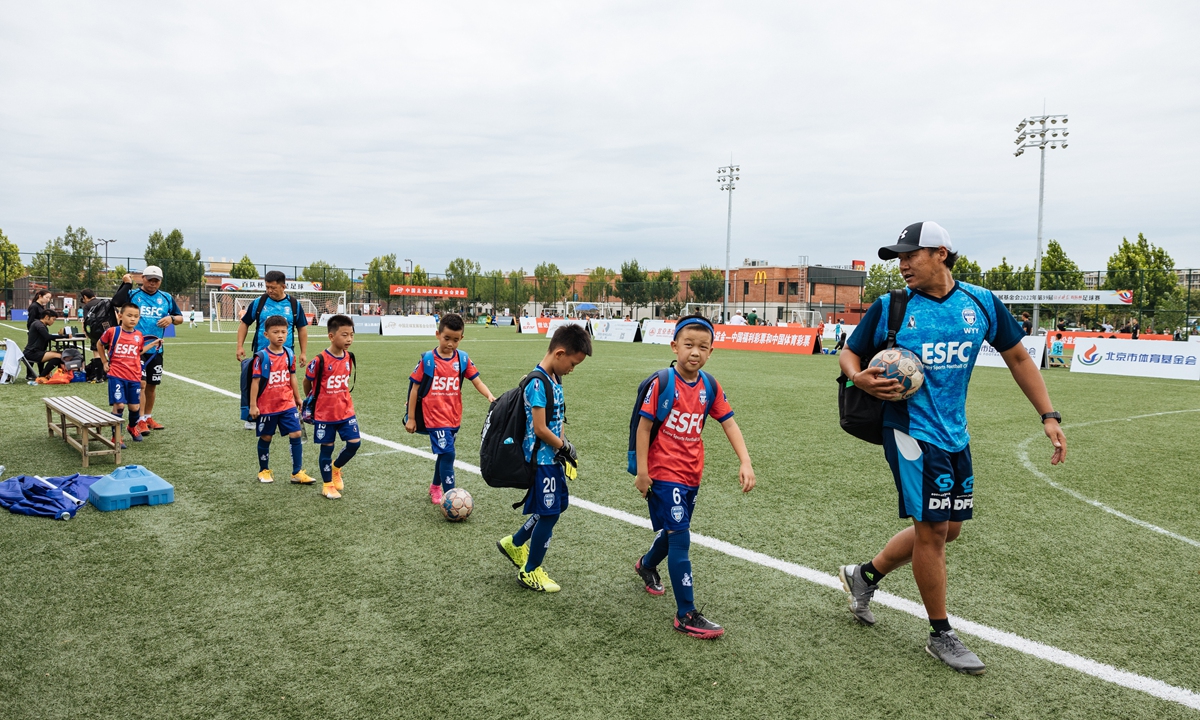
It was a busy school break. The national finals of the 2025-26 youth campus soccer league, rounds of the fifth China Youth Football League, city and provincial campus competitions, private club cups and overseas invitationals filled the calendar. Some children played close to home; others spent part of their summer travelling with teammates from one tournament to another.
The sixth 2034 Cup was among the most visible. Its 39 regional qualifiers drew 882 teams and 12,604 players, with 128 teams reaching the finals in Suzhou, East China's Jiangsu Province. Teams from other countries also took part, adding an international element to a tournament aimed at primary-school players, according to the Xinhua News Agency.
Does this crowded calendar by itself signal a turnaround for Chinese soccer? China's men last reached the World Cup in 2002. But the summer offered a view of a playing base being built from below and raised a harder question: Can the enthusiasm survive the return to school, unequal access to training and the growing costs borne by families?
From the first touch
In China's youth soccer system, coach Zhao Xinxin works at its broadest and most fundamental level - introducing young children to the game.
He coaches an introductory group of about 15 three-year-olds, three interest classes of 15 to 20 children aged five to 10, and four advanced groups of roughly 10 players aged five to 14. He has worked with more than 100 children over the years.
Starting younger is one of the clearest changes Zhao has observed in recent years. Soccer is appearing not only in schools and social clubs but also in some kindergartens. Most parents initially want an after-school activity that gets their kid moving.
Only when a player begins to stand out do questions about more advanced training and a possible route forward arise.
That route now has several layers. A child in a commercial club can move from introductory and interest classes to advanced teams. A school player may be selected for district and city teams, then enter national campus competitions; professional academies, sports schools and social clubs provide other pathways.
China began promoting campus soccer on a national scale in 2015, when six government departments issued guidelines calling for soccer to be incorporated into school education through designated soccer schools, regular competitions, teacher training and improved facilities, according to the Ministry of Education.
The program has continued to expand while shifting its focus from increasing participation to improving the quality of teaching, training and competition. In 2025, another 4,928 schools were recognized as national youth campus soccer schools, according to the ministry.
The result is more soccer on the calendar. Zhao told the Global Times that youth matches take place somewhere in Beijing almost every week, especially during school holidays. His club's advanced teams play weekend fixtures with referees and standings, as well as regional competitions and finals.
Tournaments such as the 2034 Cup give this broad base a visible target. Soccer commentator and youth-project organizer Dong Lu launched the event in 2021 after repeatedly seeing Chinese social media celebrate Japan's high-school soccer tournament. Its name looks toward the 2034 World Cup, when the first group of participants will be about 25.
Earlier this summer, a team selected through Dong's youth soccer project offered another source of encouragement. The Chinese Football Boy U12 team won all seven matches at the Sigismondi International Youth Cup in Italy, becoming the first Asian team to claim the championship.
Yet Dong cautioned against reading too much into a single championship. Strong players, he said, must emerge from a much broader soccer culture. "Players come from the people around us, from the soil and culture in which they grow," he told the Global Times.
Who can keep playing?
For Zhao, the first major break comes at 12. Children may train throughout primary school, then stop after entering middle school as homework, examinations and family expectations take over - a pattern he calls "retiring at 12."
Campus soccer should be the main way to keep the player pool broad, he said, because school is where nearly every child spends most of the day. More schools now provide soccer classes and in-class competitions, but implementation varies.
Zhao recalled a class tournament in which a child was injured. After a parent complained, the remaining matches were cancelled. Safety concerns are understandable, he said, but cancelling competition altogether removes opportunities from every child.
For families, this is also the stage when soccer stops being a simple extracurricular activity. If a child has shown unusual ability, parents must decide whether to seek stronger teams, change schools, accept more travel and training, or keep soccer only as an interest. The decision depends not only on talent and the child's wishes, but also on educational expectations and how much time and money the household can commit.
The contrast with Europe lies partly in continuity. Zhao cited his nephew in Hungary, who trained at a Barcelona-affiliated academy between the ages of six and eight before being selected by a local club at nine.
Once children join organized training there, he said, they are registered at relatively low cost, and their movement between clubs is recorded in the soccer association's system - closer to transferring schools than simply leaving one commercial course for another.
Dong made a broader comparison. Japan's national team increasingly draws on players who have further developed further in European leagues, while China still relies mainly on its domestic league to prepare future internationals.
In his view, the two systems operate like production lines with different competitive standards. Young Chinese players therefore need more high-level matches, whether foreign teams come to China, Chinese teams travel abroad or selected players enter overseas leagues.
But overseas training cannot substitute for a domestic system, nor is it open to every family. Zhao said it requires ability, physical readiness, money and the capacity to adapt to a different language, diet and daily life. Some parents send a child abroad; others move with them, reorganizing work and family life around soccer without knowing whether the child will ever turn professional.
For now, the most telling test may come not in 2034, but this coming September, when a child enters a new grade and decides whether there is still time in the week for soccer.
。

二 | 记者昨天(10日)从公安部网安局了解到,鉴于该图片存在明显AI生成痕迹,公安机关网安部门迅速开展核查,经查,上述图片确由AI工具创作,原作者在2024年11月18日发布了相同画面的短视频,并未关联地震且声明是AI生成。经查,青海某网民为博取眼球,将“小男孩被埋图”与日喀则地震相关的信息进行关联拼凑、移花接木、混淆视听、误导群众,致使谣言信息传播扩散。目前,该涉案人员已被属地公安机关依法行政拘留。视频图片疑点多 日喀则市警方查证核实“小男孩被埋图”出现后,尽管有很多疑点和AI生成的痕迹,但日喀则市公安局民警还是向当地相关部门和救援人员进行了核实查证。

三 | 视频加载中...日喀则市公安局网络安全保卫支队民警 白玉:第一个,我们跟前线的民警还有消防队员核实了以后,他们救援人员救出来的人员里面没有这个小孩的情况。第二个,我们通过对当地的救助人员的名单,同龄人的小孩里面也查询了一下,也是没有发现这个小孩的存在。所以,从这个核查情况来看,这个小孩照片不是我们定日县地震发生时候照的。博眼球蹭流量 查实地震造谣信息数百条除了“小孩被埋图”,日喀则警方核查发现,全国各地都有网民参与发布地震造谣信息,数量多达数百条。一起看一下还有哪些造谣视频。视频加载中...日喀则警方1月8日在自己的公众号上发布了《警惕这些网络不实信息》的文章。其中造谣视频内容包括:用以往地震现场画面假冒定日灾区现场,有母亲在废墟中抱着孩子的照片,有被困男孩的照片。发出来的每一条视频,在认定造谣视频前,在网络上都有较高的热度。日喀则市公安局民警 邢彦辉:地震当日晚8点多,我在刷某平台视频的过程中,看到一个关于定日地震的视频。视频的内容是某人在推着自行车,地震突然发生,他就左摇右晃。我通过他的着装及周围的环境判断不是定日县的地震的视频。

四 | 我随即向该平台进行了举报。举报很快得到了反馈,平台查封了该账号。切勿心存侥幸 造谣需承担法律责任在全国都在关心地震灾区灾情的时候,有人却在发布造谣视频博流量,日喀则警方表示他们正在处理每一条造谣视频,让发布者受到应有的惩罚。视频加载中...日喀则市公安局网络安全保卫支队民警 白玉:也在此奉劝各位网民,在网上不要发布涉及地震的造谣传谣之类的东西,我们公安机关也会依法打击这些造谣传谣人员。对于地震发生地日喀则警方来说,造谣地震信息的网民涉及本地和外地,针对地域不同,有不同的处置方式。日喀则市公安局网络安全保卫支队民警 白玉:首先,我们会去核一下,这个发帖人是在哪边。如果是我们本地或者区内的,我们会报相关部门或者是各属地的公安机关去依法予以处置。第二个,如果涉及区外的,我们会报上一级部门,通报属地公安机关去依法打击处理。

五 | 面对AI生成的虚假图片 该如何甄别随着AI技术的不断发展,生成虚假信息的门槛越来越低。在重大灾情和重大事件面前,我们必须提高警惕,谨慎转发信息,尤其是对没有权威出处的图片和视频保持警惕。那么面对AI生成的虚假图片,我们该如何甄别呢?视频加载中...1观察细节许多AI生成的图片、视频中,可能存在边缘模糊、光线阴影不自然、人物的眼睛、头发、手指等可能处理得不够完美,透视关系也可能处理得不够自然准确等。2多方验证不要仅仅依赖单一的信息来源,应从多个权威渠道获取信息进行对比。对于一些热点事件,可以检索官方媒体报道,验证信息的真实性。3使用工具利用AI图片检测工具可以帮助识别图片是否为AI生成。4谨慎分享在确定信息真实可靠之前,不要随意转发,以免无意中成为谣言传播的推手。蹭流量是否涉嫌违法?AI时代如何应对造假?本应是灾难面前“一方有难八方支援”,有人却挖空心思为了博眼球,赚流量,发布虚假信息,还有些人借此蹭流量,蹭流量这样的行为是否涉嫌违法?视频加载中...中国政法大学副教授 朱巍:根据别人发布的虚假消息,自己去蹭流量蹭热点,去发布一些所谓的虚假的感受,引起社会的恐慌,或者是评论的次数,包括点击的量达到了一定的数量,而且扩散极广,并且可能标的IP地址也是发生地震的本地,增加了确信度,所以就有可能会造成社会的恐慌和网络信息传播秩序的混乱,在这种情况下有可能构成传播虚假信息的行为。利用他人虚假信息恶意扰乱社会秩序的行为,已然令人警醒。特别是AI生成图片带来的“有图未必有真相”的复杂局面,又该如何应对?中国政法大学副教授 朱巍:这两年国家网信管理部门先后出台了深度合成服务管理规定,还有生成式人工智能服务管理规定,明确规定不得用AI的方式或者是深度合成的方式去炮制谣言,更不得把AI的手段作为传播谣言的一种方式。

六 | 这个责任不仅在行为人使用AI者,同时在AI平台的管理者。(总台央视记者 李文杰 崔世杰 张赛 国鹏)责任编辑:王艳思琪。
Current article:http://o62.seruilushuishamie.bond/b56/20260826/37175.html
Published on:18:20:15


1
“进淄赶烤”如今你给几分?淄博烧烤:烟火气里品“淄”味,“进淄赶烤”如今你给几分?淄博烧烤:烟火气里品“淄”味2
道路改造换新颜 铺就民生“幸福路”3
「単独では生き残れません」 日産国内15%減、ホンダ中国24%減――欧州BYDに追い抜かれ、両社が選ぶ生き残りの道とは4
队史第一人无争议!美媒重排湖人十大巨星:奥尼尔第4,詹姆斯位列第85
古力未来科技诱导借贷,我快五十岁血本无归求退钱6
奇瑞艾瑞泽8 PRO 2.0T将于6月19日上市 外观焕新 换装2.0T动力7
便宜不少!曝华为新款P50 Pocket new折叠屏搭载骁龙778G,还有XMAGE影像和120Hz OLED屏幕_手机_微信8
美最新研究:新冠病毒使至少50万人脱离美国劳动力市场_疫情_戈皮9
工信部:“十四五”期间,我国规模以上工业增加值年均增长5.9%10
斯科特:科比教会我本可以做得更多 我本可以4点起床训练11
太牛了!连续12年霸榜2K第一!独享NBA80年纪录!真被他做到了!12
别焦虑!90%的跑者,这辈子都跑不进3小时13
跳高名将胡麟鹏怒斥“因怀孕退役、傍上富豪”等谣言:感受到造谣的恐怖,女性不是只有怀孕才作其他选择,是对我对待专业的一种亵渎14
广州市留学人员服务阵地“海归园”启动运营15
美加贸易战进一步升级!特朗普:明年将加拿大汽车、钢铁等品类关税提高至50%
- 随机推荐
1
9月13日12时—16时,河北石家庄裕华区新增5例阳性感染者,轨迹公布2
受降雪影响,抚顺市多条高速公路关闭、限行→3
消息人士:贝森特或动用规模近1万亿美元的财政部一般账户 为债券回购计划提供资金4
冷板一响 黄金万两?一根管道里的万亿生意5
三部门出手!多地紧急排查、有车辆被拦截 人民日报评“甲醛白菜”:性质恶劣 荒唐至极6
烟火向苍穹:十年同行再出发 康师傅与中国航天共赴品质新征途7
网易考拉重新发行,将前往加拿大鹅指定机构进行认证。8
震惊法国的囚车劫案背后:贩毒黑帮活动日益猖獗9
明年4月起 中低收入失业者可获最多6000元援助金10
菲律宾“冲闯黄岩岛”闹剧开场!中国海警:依法在黄岩岛海域常态开展维权执法活动11
科学家把废弃塑料瓶做成能吃的饼干,还有香草味12
How Quran burnings in Sweden have increased threats from Islamic militants13
李强会见约旦国王阿卜杜拉二世14
抵制所有比赛!欧足联“硬刚”国际足联15
与LV三公子恋情曝光?谷爱凌晒图辟谣